• About
  • The Books
    • Thermonuclear Rikki-Tikki-Tavi
    • China Thermonuclear Conflagration 2029: Worldwide Nuclear Winter
    • Mushroom Cloud
    • Finding Designated Ground Zero
    • Armageddon
  • Reviews
  • Contact
  • Blog
THOMAS J. YEGGY
  • About
  • The Books
    • Thermonuclear Rikki-Tikki-Tavi
    • China Thermonuclear Conflagration 2029: Worldwide Nuclear Winter
    • Mushroom Cloud
    • Finding Designated Ground Zero
    • Armageddon
  • Reviews
  • Contact
  • Blog

​My Thoughts on Current Events
AKA My Blog

Part V: Checkpoint Charlie and the Draft Presidential Memorandum

12/9/2023

0 Comments

 
1961's Doomsday Countdown: Tanks, Tensions, and Top-Secret Plans Revealed! Uncover the pulse-pounding brinkmanship at Checkpoint Charlie that nearly sparked World War III. Dive into the clandestine Draft Presidential Memorandum of October 28, 1961, and discover the shocking alternative plan that could have changed history. 
Picture

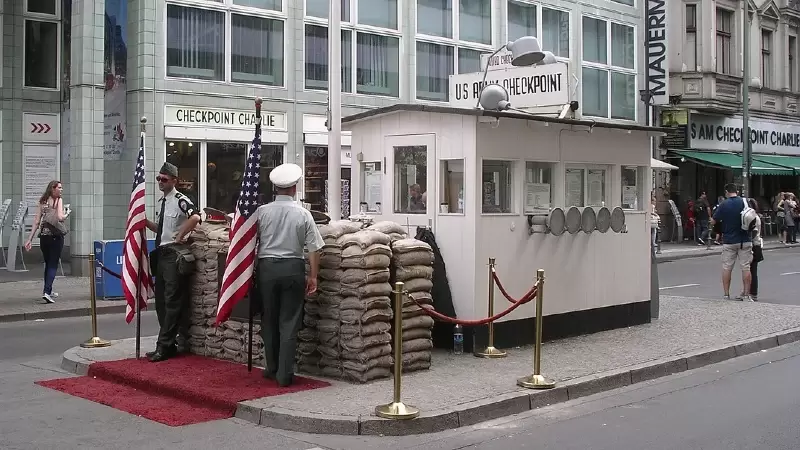
Checkpoint Charlie and the
​Draft Presidential Memorandum

Dated October 28, 1961

As Tensions Continued to Grow, Plan B Was Developed

A.    After the building of the Berlin Wall during August and September of 1961, President Kennedy thought October might usher in a calmer period among the superpowers. “Better a wall than a war,” he was heard to remark. But his hopes for any lessening of the tensions were to be short-lived.

B. After the building of the wall, military and diplomatic personnel from the Western powers passed through checkpoints along the wall in the city of Berlin. The East German police attempted to stop and request identification from US personnel passing through these checkpoints. The United States responded by having armored military personnel escort diplomats through these gates. Khrushchev, who had been angered by Kennedy’s July 25 speech and subsequent buildup of the US military in Western Europe, decided to put a stop to the US show of force in Berlin. On October 27, the Soviets moved thirty-three tanks into position at Checkpoint Charlie to block the entrance of US personnel until they showed the East German police their credentials. The US called in ten tanks of their own. For the next seventeen hours, forty-three tanks with live rounds loaded stood ready to kick off World War III. NATO, the US garrison in West Berlin, and the Strategic Air Command raised their alert levels. The Soviet checkpoint had direct communications with General Anatoly Gribkov at the Soviet Army High Command, who was on the phone with Khrushchev. Kennedy was on the phone with General Lucius Clay, his military advisor in Berlin. It is against this backdrop that Kennedy received DPM on 10/28/1961 that contemplated a revision to the original Kaysen-Rowen limited counterforce surprise attack plan. Although some may doubt whether Kennedy would have pulled the trigger, he undoubtedly had this revised plan as an alternative and may have requested this update as tensions rose in Berlin at Checkpoint Charlie. As terrible as the concept sounds, there are many reasons why a surprise attack by the United States made sense in 1962. I will attempt to make a rational case for the unthinkable.

C. . Both sides knew that a significant advantage would be gained by the side that struck first. In my blog and books, I have detailed many comments to that effect from both military and civilian leaders. If the United States was convinced that the Soviets would strike, a preemptive US counterforce strike would save tens of millions of lives on both sides. Kaysen and Rowen estimated as few as one million lives would be lost in a US preventative strike.

D.  A deep distrust permeated the relationship. A decision to make a first strike is easily made in a dictatorship and conversely difficult in a republic. So this calculus brings a reality into focus where a Soviet first strike would be relatively more difficult to detect and would have disregard for civilian casualties. The Soviet attack would therefore include countervalue as well as counterforce targets. That eventuality must be avoided even at the cost of the one or two million Soviet lives lost in the Kaysen plan. Was a Soviet attack likely? Oleg Penkovsky, a trusted GRU defector, had passed on to US intelligence the fact that operation Buria conducted in October 1961, involving millions of Soviet troops, was a prelude to a Soviet first strike. The hostilities over Berlin persisted into 1962 with Soviet planes dropping chaff and buzzing allied planes in their air corridors. Commenting on the Berlin situation, Bobby Kennedy stated, “I don’t think people really understood around the country. The president felt strongly, and I did, that we were very close to war at the time.” The Soviets resumed atmospheric nuclear testing and set off the 50 Mt tsar bomb on October 30, 1961. Finally, I will make an analysis of the weapons cycle that greatly favored the United States on September 1, 1962.

E. There was a submarine disparity. By May 1962, the United States had eight Polaris laden submarines, each carrying sixteen ballistic missiles with a range up to 1,700 miles. Those missiles could be fired from a submerged position. The Soviets, on the other hand, had eight Hotel class submarines with D2 launchers featuring R13 missiles that had a range of 370 miles and carried 1–2 Mt warheads but had to surface to fire the missiles. In addition, the Soviets had six Zulu and three early Golf class submarines that were capable of firing R-11 FM missiles with a range of 110 miles. Finally, the Soviets had twenty-one golf project 629 submarines with D2 launchers and R13 missiles. However, the key to the submarine situation would change drastically in December 1963 when the Hotel Class II and Golf Class II submarines started carrying a D4 launcher with an R-21 missile capable of being fired from a submerged position with a range up to 900 miles and carrying a 1 Mt warhead.

F.    What was the readiness of liquid-fueled ICBMs versus solid-fueled ICBMs? The only MRBMs and ICBMs available to the Soviets on September 1, 1962, were fueled by liquid oxygen (LOX) and kerosene. These missiles could not be fueled and kept in a ready state for more than thirty days. Fueling, warming up the electrical systems, and loading the warhead took three to six hours at a minimum. You could not load and reload the fuel since once it was loaded, the missile was spent due to the corrosive qualities of the fuel. Polaris missiles were solid fueled. The United States recognized that solid fueled missiles were the future and by July 1962 had deployed the LGM-30 minuteman, a solid-fueled ICBM. The minuteman could be fired within 15 minutes of a launch order, was highly accurate with a CEP 1.1 (nm) and carried a .8 MT W-59 warhead. The US also had more than 150 of the less dependable Atlas and Titan I ICBMs available.  Joint control of the MRBMs in England, Italy and Turkey would prohibit their use in a preventive attack.

G.    The striking power of the United States was greatly enhanced when the aircraft carrier USS Forrestal came out of dry dock in February 1962 and the aircraft carrier USS Enterprise joined the second fleet in the Atlantic in June 1962. That gave the United States two modern aircraft carriers for a northern attack and two modern carriers for a southern approach. The four aircraft carriers brought more than 200 nuclear-capable bombers to the region. The CV-61 Ranger would be deployed in the southern region of the Sea of Okhotsk to target Russia's eastern bases.

H.   Finally, more than fifty B-47s were available to take off from Spanish bases and be deployed to forward bases in Germany where their nearly 1,000-mile combat radius put them in a perfect position to take out MRBM sites, Tu-16 bases, and major Soviet armor installations, substantially reducing the exposure of US NATO allies to a knee-jerk retaliation once Soviet strategic counterforce targets were taken out.

I.    From an ideological standpoint, Khrushchev had presented his Cuban missile plan to the Presidium from May 21–24, 1962. The plan won unanimous approval. Khrushchev also sent combat planes and pilots to Egypt, attempting to gain influence in an area contested by the United States. Clearly a collision course had been set. The United States could have acted to implement a first strike counterforce plan had it heeded CIA Director John McCone’s warnings during the summer of 1962 that the Soviets were installing offensive weapons in Cuba. This dangerous action on the part of Khrushchev, if taken seriously by Kennedy would have provided adequate cause for a preventative attack. But of course, just because you can do something doesn’t mean you should. On the other hand, apprising yourself of your opponent’s continued ruthless enslavement of over 100 million Central Europeans at the point of a bayonet argues for intervention on behalf of those countries. It is entirely possible that a much smaller number would have been killed by this limited strike than by the GRU and KGB over the next thirty years.

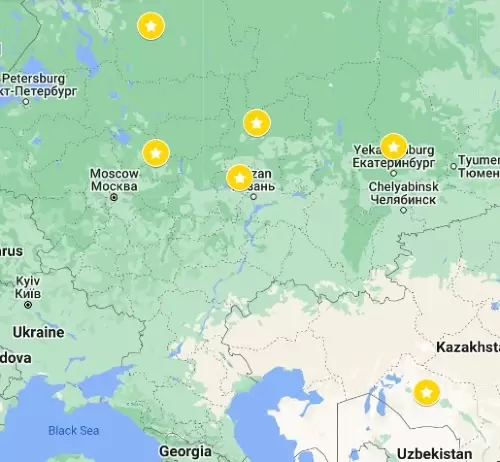
J.    Primary Targets for B-52s – The Six Suspected ICBM Sites – Six Planes (N) Two (s) and Two (W).

K.    Plesetsk Cosmodrome 62°55′32″N 40°34′40″E ICBM #2 VIP (N)

L.    Tyuratam-Baikonur 45°39’N 63°18’50”E ICBM four launch sites #2 VIP(S)

M.   Verkhnyaya Salda 58°02’44” N 60°33’12” E VIP (N)

N.    Yoshkar-Ola 56°37’59” N 47°52’00” E VIP (N)

O.    Kostroma 57°46’05”N 40°55’37”E ICBM #2 VIP(N)

P.    YurYa 59°02’N 49°16’E ICBM #2 VIP (N)
Primary Targets for B-52s
Q.    Eight Tu-95 and several M-4 Home Bases and Dispersal Bases:
  1. Dolon (MB), aka Chagan and Semipalitinsk Dolon, 50°32′N 079°11′0″E, Tu-95, Tu95, 3M, and M-4 VIP (W)
  2. Engels-2 51°28′52″N 046°12′38″E M-4 and the 3M VIP (N)
  3. Uzyn Air Base 49°47′25″N 30°26′27″E, Tu-95K stand-off missile carriers starting in 1959 VIP (N)
  4. Dyagilevo (MB) 54°38′30″N 039°34′18″E M-4 VIP (N)
  5. Ukrainka Air Base 51°10′12″N 128°26′42″E – in 1955, Ukrainka was one of only six Soviet bases capable of handling the Myasishchev M-4 (NATO: Bison) bomber VIP (W)
  6. Mozdok 43°47′15″N 44°36′11″E, Tu-95 base VIP (S)
  7. Lebedovo 51°17′0″N 046°15′0″E, dispersal site for bombers from Engels during high tension VIP (N)
  8. Mengon (SB) 50°02’00” 136°18’00”E, dispersal base VIP (S)
  9. Tiski 71°41′51″N 128°54′10″E, Tu-95 staging base
  10. Tiski North 72°2′18″N 128°28′18″E, Tu-95 staging base
  11. Tiski West 71°41′36″N 128°41′0″E, Tu-95 staging base
  12. Vozdvizhenka aka Ussuriysk 43°54′44″N 131°55′04″E, Pacific Long Range Bomber Fleet Tu-16 VIP
  13. Aspidnoye (SB) aka Dresba-Krumaya 69°21′48″N 161°33′42″E, Arctic staging base for Tu-95 and Tu-16 VIP
  14. Belaya (MB) aka Srednii 52°54′54″N 103°34′30″E, Tu-4A, Tu-16, Tu-16K
Home Bases and Dispersal Bases

Carriers: CV-59 Forrestal in Barents; CV-60 Saratoga in Agean; CV-61 Ranger in Sea of Okhotsk; CV-62 Independence in Adriatic; CV-65 Enterprise in North Sea

(note that the Forrestal was in dry dock until February 1962, and the Enterprise joined the Atlantic Fleet in June 1962). 
This surprise attack takes place on September 1, 1962. At that time, McCone had warned the Kennedy administration that offensive weapons were being placed in Cuba but not yet operational. An investigation would have revealed this subterfuge and set the stage for the preventive attack that would be impossible seven weeks later when the Russians became apprised of the fact that the United States was aware of their lies and thus went on a high stage of alert.. The majority of the Golf and Hotel class SSBM submarines were in their pens for repairs while the Barents Sea was passable on September 1, 1962.

Care has to be taken that the carriers remain safe from the P-15 Termit, the K-10S, and the AS-1 anti-carrier missiles even though the reliability and accuracy are poor. Forces should not be grouped so as to alert the early warning stations in North Africa and northeast Europe.

​The Enterprise and the Forrestal would be striking mainly Northern and Baltic fleet forces with A4D-2N (A-4C) Skyhawks Night/adverse weather version of A4D-2, with AN/APG-53A radar, autopilot, and a (LABS) low-altitude bombing system. The Wright J65-W-20 engine with 8,200 lbf (36 kN) of takeoff thrust was redesignated A-4C in 1962, 638 were built. It would carry the B-43, a lighweight (2,200 lbs) 1.4 Mt thermonuclear bomb.

Specification of Douglas A4D-2N/A-4C Skyhawk

Engine: One Wright J65-W-16 turbojet, rated at 7,700 lbs.
Performance: maximum speed 657 mph at 4,000 feet; cruising speed 496 mph; stalling speed 140 mph.
Combat ceiling: 44,000 feet (clean), 40,000 feet with a single Mk.28 nuclear weapon.
Initial climb rate: 7,100 feet per minute. An altitude of 20,000 feet could be attained in 4.5 minutes with a single Mk 28. Combat range: 1,140 miles (clean).
Dimensions: wingspan 27 feet 6 inches.
Length: 40 feet 1 inch; height: 15 feet; wing area: 260 square feet;
Weights: 9,146 pounds empty, 15,359 pounds combat weight, 17,535 pounds gross, 22,500 pounds maximum; armament: two 20 mm cannons with 100 rpg; three underwing pylons; primarily coastal targets.
  • A3D-2 (A-3B): Definitive production bomber version with stronger airframe, more powerful engines, slightly larger wing area (812 ft²/75 m2 versus 779 ft²/72 m2), provision for in-flight refueling reel for tanker role. The final twenty-one built had a new AN/ASB-7 bombing system, a reshaped nose, a deleted tail turret in favor of electronic warfare installation with the following performance characteristics:
    • Maximum speed: 530 kn (610 mph, 980 km/h) at 10,000 ft (3,000 m)
    • Cruise speed: 520 kn (600 mph, 960 km/h)
    • Range: 1,825 nmi (2,100 mi, 3,380 km)
    • Ferry range: 2,520 nmi (2,900 mi, 4,670 km)
    • Service ceiling: 41,000 ft (12,000 m)
    • g limits: +3.4
    • Wing loading: 86.2 lb/sq ft (421 kg/m2)
    • Thrust/weight: 0.357
    • Armament
    • Guns: 2 × 20 mmM3L cannon in the tail turret
    • Bombs: 12,800 pounds (5,800 kg) of free-fall bombs or mines, including any combination of
      • 12 × 500 pounds (230 kg) Mark 82 bombs or
      • 6 × 1,000 pounds (450 kg) Mark 83 bombs or
      • 8 × 1,600 pounds (730 kg) armor-piercing bombs or
      • 4 × 2,000 pounds (910 kg) bombs
      • 1 × free-fall nuclear weapon
  • A3J-1/A-5A Vigilante: (deployed 6-61; low-level attacks at high speeds); two squadrons, the VAH-7 and VAH-1, deployed on the Enterprise from August 3 to October 11, 1962 
    • Maximum speed: 1,149 kn (1,322 mph, 2,128 km/h) at 40,000 ft (12,000 m)
    • Maximum speed: Mach 2
    • Combat range: 974 nmi (1,121 mi, 1,804 km) (to target and return)
    • Ferry range: 1,571 nmi (1,808 mi, 2,909 km)
    • Service ceiling: 52,100 ft (15,900 m)
    • Rate of climb: 8,000 ft/min (41 m/s)
    • Wing loading: 80.4 lb/sq ft (393 kg/m2)
    • Thrust/weight: 0.72
    • Armament
    • Bombs:
      • 1× B27, B28 or B43 freefall nuclear bomb in internal weapons bay
      • 2× B43, Mark 83, or Mark 84 bombs on two external hardpoints

Coastal and Interior Targets for Carrier Planes

Enterprise and Forrestal :

  1. Vidyayevo, aka Ura Bay, Northern Fleet Naval Base 69°19′N 32°48′E, diesel-powered subs
  2. Polyarnyy 69°12’N 33°28’E
  3. Ura Bay Naval Base 69°19′N 32°48′E, and Ara Bay (#2)
  4. Severomorsk 69.0690°N, 33.4082°E, Northern Fleet home base
  5. Zapadnaya Lista aka Bolshaya Lopatka (Lista Guba) 69°25’N 32°26’E, nuclear sub base
  6. Malaya Lopatka-Bolshaya Lopatka 69°26'12"N 32°25'30"E, only 2 miles apart – main sub base
  7. Olenya (SB) near Skalisty less than 2 miles NE 68°09′06″N 033°28′12″E, Tu-22 first detected in 1957 and served as forward staging base; many SAM sites in this area, also Naval base
  8. Gadzhiyevo aka Yagelnaya Guba 69.258878° 33.335251°, located on the eastern shore of Guba Sayda (Sayda Bay), Murmanskaya Oblast Naval Base Northern Fleet
  9. Soltsy Air Base 58°8′48″N 030°19′54″E (#6)
  10. Ostrovnoy (Gremikha-Yokanga) 68°03′N 39°30′E, main service base for nuclear subs
  11. Severodvinsk 64°34′N 39°52′E
  12. Arkhangelsk 64°26’N 40°23’E (see also Lakhta I Naval base 64°23′0″N 40°43′0″E, Tu-16 base) (see also Arkhangelsk/Yagoon 64°24’N 40°54’E)
  13. Belmorsk 64°31’N 34°46’E, submarine base VIP
  14. Baltiysk Naval Base 54°39'16.38"N 19°54'33.44"E
  15. Karosta-Leipaja (submarines) 56°33′0″N 21°0′20″E, Baltic Fleets 14th Submarine Squadron
  16. Bykhov 53°31’N 30°12’E, one on 1956 target list, (East Germany) VIP
  17. Ozerne (MB) 50°9′30″N 028°44′18″E, 15th Guard’s Heavy Bomber Division Tu-16
  18. Baranovichi (MB) 53°5′7″N 26°2′8″E (Belarus), Tu-16 base deployed Tu-16 bombers to Tiski and onward to ice station SP-6
  19. Dyagilevo (MB) 54°38′30″N 039°34′18″E M-4 VIP
  20. Pochinok 54°20′24″N 032°28′24″E
  21. Seshcha 53°43’N 033°21’E
  22. Ostrov/Gorokhovo 57°18′0″N 028°26′0″E, Tu-16K and Tu-16Z
  23. Soltsy Air Base 58°8′48″N 030°19′54″E, Tu-22
  24. Bobruysk 53°6′17″N 29°12′21″E, threat to NATO allies
  25. Melitopol 46°52′36″N 035°18′27″E
  26. Tartu 58°24’N 026°46E
  27. Minsk-Machulische 53°46′25″N 027°34′38″E
  28. Pryluky Air Base 50°34′0″N 032°19′0″E, Tu-16 medium bombers
  29. Poltava Air Base 49°37′37″N 034°29′11″E, Tu-16
  30. Zhitomir/Skomorokhi 50°10’N 028°44’E
  31. Orsha/Orsha S.W. 54°26’N 30°17’E
  32. Gomel/Pribytki 52°18’N 031°10’E
  33. Leningrad Air Control Center 60°03’N 030°11’E
  34. Moscow/Bykovo Command and Control 55°37’N 38°03’E
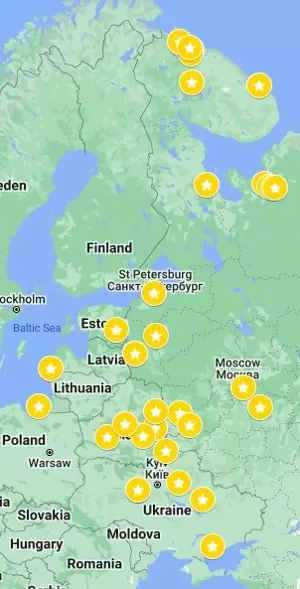
Enterprise and Forrestal Targets

Saratoga and Independence Targets:

The Saratoga (Aegean Sea) and the Independence (Adriatic) would utilize a similar component of planes to strike similar types of targets. In some cases, there would be a duplication of targets. They would also strike troops, airborne bases, and mechanized units within the reach of their carriers. Like any war plan it would change on the fly.

  1. Tyuratam-Baikonur 45°39’N 63°18’50”E ICBM four launch sites #2 VIP
  2. Belaya/Tserkov aka Bila Tserkva 49°47′46″N 30°01′28″E, heavy bomber base Tu-16 and later Tu-16N
  3. Uzyn Air Base 49°47′25″N 30°26′27″E, Tu-95K stand-off missile carriers starting in 1959 VIP
  4. Spassk-Dalny Airfield 44°36′47″N 132°53′13″E, Tu-16
  5. Mozdok 43°47′15″N 44°36′11″E, Tu-95 base VIP
  6. Melitopol 46°52′36″N 035°18′27″E
  7. Sevastopol 44°36′28″N 33°31′48″E Black Sea Fleet VIP
  8. Balaklava Crimea 44°29′56″N 33°35′46″E, submarine pen deeply fortified needs Mt or more (hidden subs in cave) VIP
  9. Pryluky Air Base 50°34′0″N 032°19′0″E, Tu-16 medium bombers
  10. Poltava Air Base 49°37′37″N 034°29′11″E, Tu-16
  11. Zhitomir/Skomorokhi 50°10’N 028°44’E
  12. Poltava Air Base 49°37′37″N 034°29′11″E, Tu-16
Saratoga and Independence Targets

The B-47s would be devoted to MRBM sites from the Baltic to the ukraine. Fifty to one hundred of those sites have been identified. Note that Wunsdorf has to be hit with conventional weapons because of its proximity to Berlin. Below are a few examples:

  • Plokstine 56°1′39″N 21°54′33″E
  • Rohu 59°8'48''N 26°26'24''E
  • Klaipeda 55°42′45″N 21°08′06″E
  • Wunsdorf N 52°11’52” 13°28’'00” E  ( not an MRBM site but home base for over 50,000 Soviet Troops) 
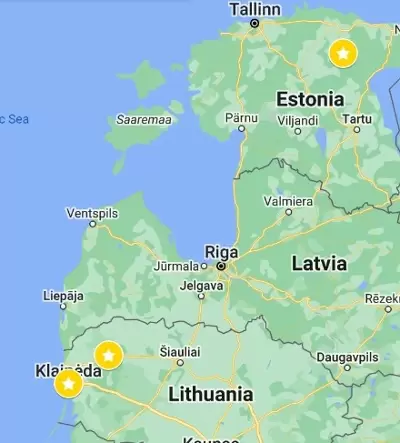
b-47
At sites located close to NATO bases, a surface burst of a smaller nuclear weapon would be used. It should also be noted that the attack could be carried out with only two aircraft carriers, each with 40 A-4Cs and 15 A-5As because of the lack of strategic targets as noted in the opinion section below.
​

Ballistic Missile Submarines:

  1. George Washington 16 A-1, 1,400 miles, 1 Mt warhead
  2. Patrick Henry 16 A-1, 1,400 miles, 1 Mt warhead
  3. Theodore Roosevelt 16 A-1, 1,400 miles, 1 Mt Warhead
  4. Robert E. Lee 16 A-1, 1,400 miles, 1 Mt warhead
  5. Abraham Lincoln 16 A-1, 1,400 miles, 1 Mt warhead
Located in the Barents Sea, giving all five enough range to reach Moscow and /or Leningrad.

Ethan Allen Class:

All three have the A-2 missile with a 1,725-mile range and a 1 Mt warhead, located in the Adriatic or Aegean Sea, giving them enough range to reach Moscow, Leningrad, or other opportunistic targets.
  • Ethan Allen SSBN-608
  • Sam Houston SSBN-609
  • Thomas A. Edison SSBN-610
The major drawback is the accuracy of the Polaris A-1 and A-2, each having a circular error probability of 2.2 miles, which means they would not be suitable for any hardened targets and might only be useful after the initial attack to threaten cities to force surrender. Also, the Sam Houston and Thomas A. Edison would be forced into service without completing full training but were far enough along to be functional for this mission.
All ICBms and the remaining 725 B-52s would be held back as negotiations for surrender would have taken place after the second wave which would inclue all non-B-52 assets above. 

Conclusion

​Carl Kaysen was interviewed by Marc Trachtenberg, David Rosenberg, and Stephen Van Evera in 1988. During that interview, Kaysen disclosed that he and Rowen were aghast at the carnage inherent in SIOP-62 and concluded, after presenting their plan to Robert McNamara, that “we knew that there were only 6 or 7 operational ones (missiles) and 3 or 4 more in the test sites and so on. As for the Soviet bombers, they were in a very low state of alert. . . . And the answer was that in 1961 we could have made sure, with a high level of confidence to disarm the Soviets in this way, there was no need to execute the whole SAC mission.”

In the end, Kennedy and McNamara decided against the plan because “there were just too many things that could go wrong.” But had Live Oak failed to open the autobahn, my guess is that there would have been renewed consideration of this plan in light of the US rejection of TNWs as an alternative in 1957.

Opinion

Both plans in their totality constitute massive overkill. Ten B-52H bombers alone could have taken out the less than twenty strategic targets in 1961-1962. The 10-28-61 DPM may have recognized that and provided all the other assets to take out Moscow and Leningrad if the Soviets fired on London or Paris. Taking out the command-and-control systems begs the question as to how the Soviets contact all of the MRBM sites and tell them the war is over. Kennedy and McNamara knew that "in the fog of war" any plan would face many other unforseen problems as well and thankfully Khrushchev knew that he could not push the young American President to the precipice.   ​

Picture
Go to part IV
Picture
get the books now
0 Comments

Your comment will be posted after it is approved.


Leave a Reply.

    Archives

    December 2025
    September 2025
    August 2025
    December 2023
    November 2023
    October 2023
    September 2023
    July 2023
    June 2023
    May 2023
    March 2023
    February 2023

    Get the Books

    Categories

    All
    Armageddon
    China Thermonuclear
    Designated Ground Zero
    Drones MQ 9
    Mushroom Cloud
    Nuclear War
    Reviews
    Weapons
    Weapons Technology

    RSS Feed

    Get the Books
​© 2025 ThomasJYeggy.com
Designed by Remote Digital Media
  • About
  • The Books
    • Thermonuclear Rikki-Tikki-Tavi
    • China Thermonuclear Conflagration 2029: Worldwide Nuclear Winter
    • Mushroom Cloud
    • Finding Designated Ground Zero
    • Armageddon
  • Reviews
  • Contact
  • Blog